PRP for Hair Loss in Richmond Hill
Expert PRP for Hair Loss in Richmond Hill – Safe, precise injections to naturally restore thicker, healthier hair.
July 16, 2026, 3 min read,
In practice, onset and longevity are influenced by multiple factors, including injection technique, product choice, dose, muscle activity, metabolism, and overall health. Zinc may be relevant when there is a true deficiency, but it should not be treated as a guaranteed shortcut to longer-lasting results.
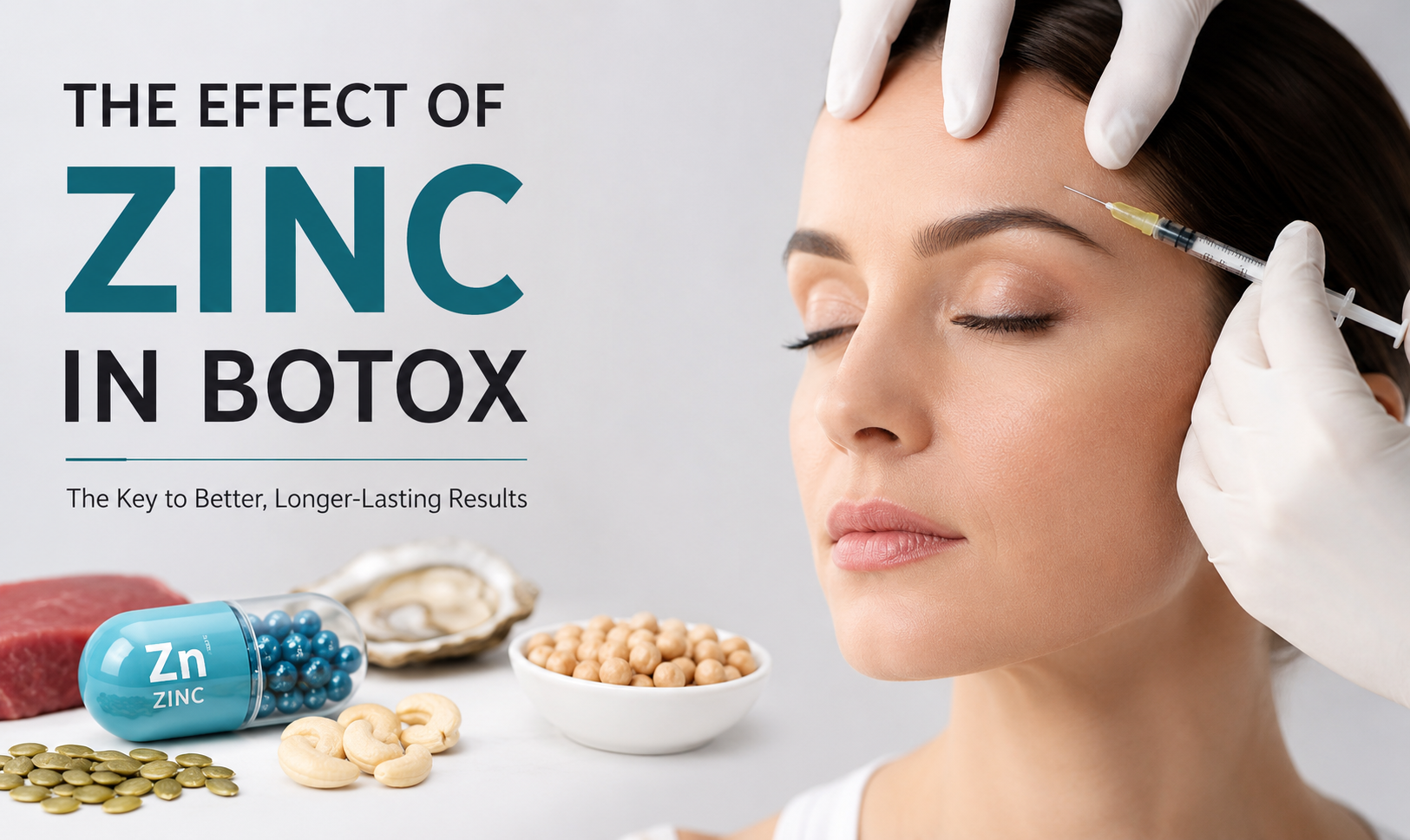
Botulinum toxin works at the neuromuscular junction, where nerve endings communicate with muscle fibers. By reducing the release of acetylcholine, it relaxes targeted muscles and softens dynamic facial lines such as frown lines, forehead creases, and crow’s feet.
For the treatment to work, the toxin must bind to the nerve terminal, enter the cell, and cleave proteins involved in neurotransmitter release. One of the best-known targets in this process is SNAP-25.
Researchers describe botulinum neurotoxins as zinc-dependent proteases. That means zinc is part of the biochemical mechanism behind the toxin’s enzymatic activity.
This molecular detail explains why some patients ask about zinc before treatment. However, laboratory biology and real-world cosmetic outcomes are not the same thing, so supplementation should be discussed carefully rather than assumed to be beneficial.
Biological Component | Primary Function | Role in the Process |
Botulinum toxin | Relaxes targeted muscles by blocking neurotransmitter release | Requires zinc-dependent enzymatic activity |
SNAP-25 | Helps mediate neurotransmitter release | Cleaved during toxin action |
Zinc ions | Support enzymatic function | Necessary cofactor in the mechanism |
Current evidence does not clearly show that routine zinc supplementation consistently makes cosmetic Botox kick in faster or last significantly longer in healthy individuals. The theory is biologically plausible, but the clinical benefit remains uncertain for people who already have normal zinc status.
If someone has a documented zinc deficiency, correcting that deficiency may support normal function and overall health. Even then, supplements should be used thoughtfully and with professional advice rather than as a cosmetic promise.

Zinc is essential, but more is not always better. Too much zinc can lead to nausea, gastrointestinal upset, and copper imbalance over time.
If you are considering zinc around the time of your Botox treatment, speak with your injector or family physician first, especially if you already take vitamins, immune supplements, or other mineral products.
For most healthy adults, there is no strong proof that extra zinc will reliably improve Botox onset time or longevity. The best approach is still to choose a qualified provider, follow aftercare carefully, maintain realistic expectations, and support your health with a balanced diet.